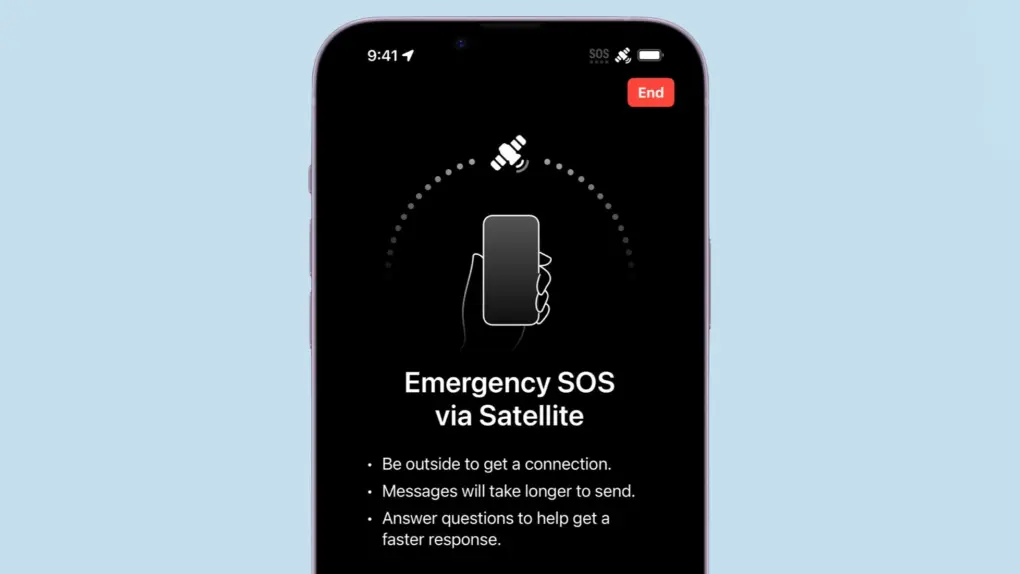
Six survivors of a deadly backcountry avalanche near Lake Tahoe in California this week communicated with emergency responders through an iPhone’s Emergency SOS via satellite feature to help ensure their rescue, according to reports. It helped safeguard their lives, though nine others were killed in the tragedy.
How iPhone satellite SOS helped save skiers in deadly avalanche
Thanks to the iPhone and a Garmin inReach used as a beacon, a ski trip guide at the scene stayed in contact with first responders, relaying information to the Nevada County Sheriff’s Office to coordinate the rescue, according to The New York Times. It’s far from the first time Emergency SOS via satellite has come to the rescue, as it has aided hikers and others in dire straits.
“One of my personnel was communicating with one of the guides over a four-hour period, giving information back to the Nevada sheriff’s office and coordinating what rescues could be permitted,” said Don O’Keefe from California’s Office of Emergency Services.
The six were among a group of 15 skiers on a guided three-day trip through California’s Sierra Nevada mountains. The other nine did not survive, with eight buried by snow and debris and a ninth missing and presumed dead.
What the feature does
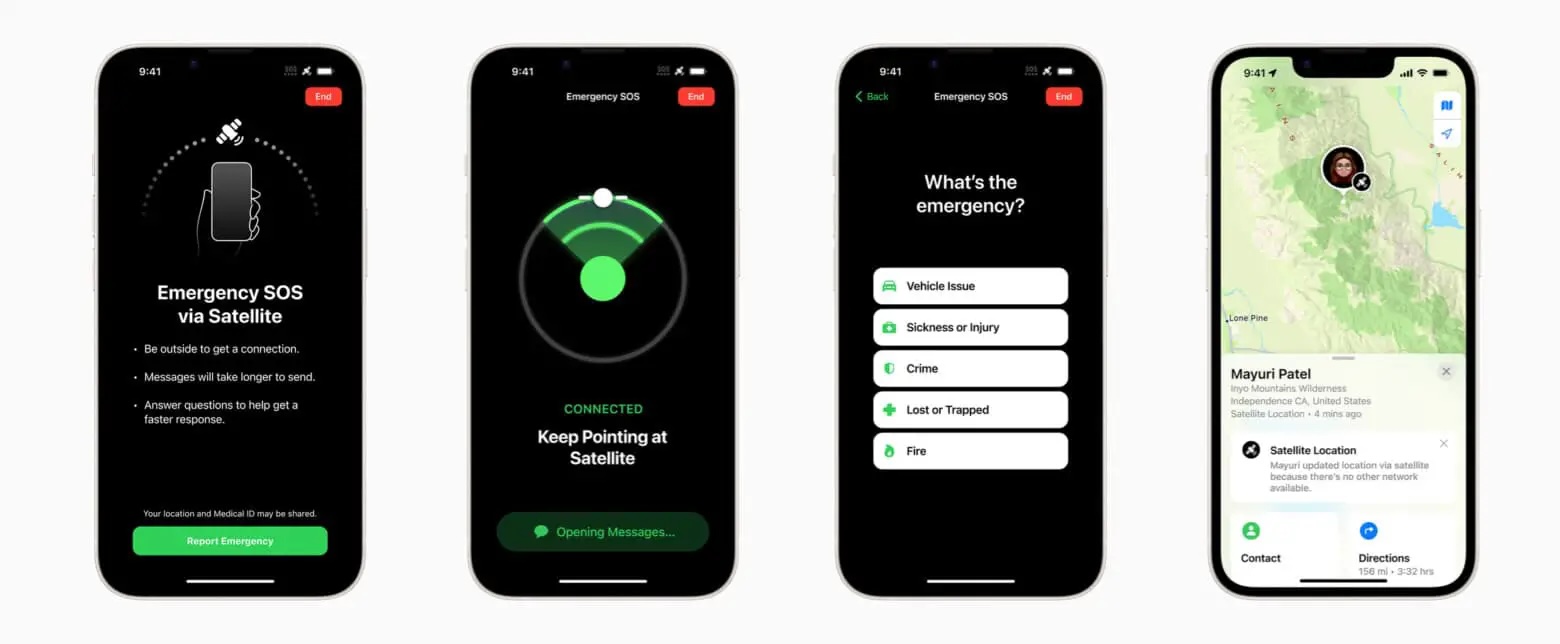
Photo: Apple
Emergency SOS via satellite came out in 2022 with all iPhone 14 models. It allows iPhone users to reach emergency services by text when there is no cellular or Wi-Fi connection. It uses a direct link to a satellite.
To connect, users need to be outside with a clear view of the sky. Once linked, the phone sends the message to emergency responders. Then they can then gather details like location, emergency contacts and remaining battery life.
Which devices support it
The feature is available on all iPhone 14, 15, 16, and 17 models running iOS 16.1 or newer. And it’s free for two years after a device is activated.
However, Apple keeps extending the free two years of Emergency SOS via satellite that buyers of new iPhones and Apple Watches get. In fact, it’s still free for iPhone 14 users. And maybe it will remain free for some time, though we’ll have to see what Apple does later this year regarding attaching pricing to the service.
Some Android users also have access — specifically those with certain Pixel 9 models and all Pixel 10 devices.

David Snow, an expert on Apple hardware and software, writes on a variety of technological and cultural topics for Cult of Mac. They include Apple news, technology buying guides, and features about computer setups and Apple TV shows and movies.
With 30 years of experience covering technology and other subjects, he has written and edited for numerous print and online publications, including CMP Media, TechTV.com, CNET, Wired News, Red Herring magazine, Law.com, The National Law Journal and Law Technology News magazine. Among other roles, he served as executive editor of the Law.com network of websites and editorial director, technology, for ALM Media.
Snow graduated with a B.A. from Syracuse University with majors in magazine journalism and psychology. While there, he worked as a reporter for The Daily Orange newspaper and associate editor of Equal Time magazine.
Founder of the blog At the Waterline, he can be reached on X (formerly Twitter) via @atthewaterline and on Mastodon via @dsnow.

